

Are you a reading teacher? Maybe you are a mom who is trying to teach reading or spelling at home wondering, “what are digraphs anyways?”. If you said “Yes!” to either of these questions, you are in the right place!
In this article, you are going to learn more information about what are digraph words and how to teach them!

This post may contain affiliate links, which means I’ll receive a commission if you purchase through my link, at no extra cost to you. Please read my disclosure below.
When are Digraphs Taught?
Let’s start with when digraphs are taught. They are taught towards the end of kindergarten or in the beginning of first grade. This means by the end of first grade, children should be reading, recognizing, and writing words that have digraphs in them.
According to the common core standards that are used in most American schools, children should:
CCSS.ELA-LITERACY.RF.1.3
Know and apply grade-level phonics and word analysis skills in decoding words.
CCSS.ELA-LITERACY.RF.1.3.A
Know the spelling-sound correspondences for common consonant digraphs.
CCSS.ELA-LITERACY.RF.1.3.B
Decode regularly spelled one-syllable words.
These standards are from the Common Core Standards in first grade reading foundational skills, you can read more about them here.
What are Digraphs?
To begin to understand what digraphs are, we first need to understand that each letter of our language has a sound associated with it. In the English language, the alphabet is made up of consonants and vowels. Each of the consonants and vowels has its own sounds that they make.
The vowels are special because they have more than one sound. If you are looking for more information on this you can read this article here:

After children learn the sounds that each letter makes and begin blending them to read, they will begin to learn that the letters at times say different sounds.
Digraphs are two letters that make one sound. Within the English language, we have consonant digraphs and vowel digraphs.
For example “sh” is a digraph and it’s easily heard at the beginning of the word “ship”. In the word “ship” the s isn’t saying the typical sound of /s/ like in snake. Instead, it’s coming together with the h in the word to make a new sound. You can also hear the “sh” digraph at the end of the word “fish”.
What are the Consonant Digraphs?
Now that you know that digraphs are made from two letters coming together to make one letter sound or to change the sounds letters make, you might be wondering “what are the consonant digraphs?”. Consonant digraphs are made up of two consonants that come together to make one sound.
Below I will list the consonant digraphs with an example of a word in which it is used:
sh: ship, wash
ch: chip, much
th: them, with
ph: phone, nephew
wh: wheel
ck (comes at the end of the word): neck

Looking for information on what are the consonant digraphs? Ch, ph, sh, wh, ck, and th are the digraph consonants.
What are Vowel Digraphs?
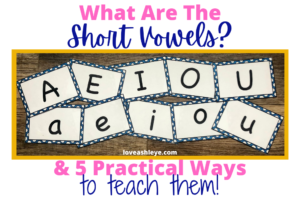
Now that you know about words with consonant digraphs, let’s have a look at the vowel digraphs. Children are typically first taught the vowel’s short sounds. Some examples of the short vowel sounds are /a/ as in cat, /i/ as in sit, /e/ as in get, /o/ as in hot, and /u/ as in sun.
Children are then taught the long vowel sounds. Typically for a vowel to say its long sound, it needs to have another letter with it. The long vowel sound forces the letter to say its name like in the word “play” the a is saying its long sound instead of its short sound /a/.
Vowel digraphs are two vowels that come together to make one sound. Usually, the vowel digraphs will come together to have the vowel say its own name or the long vowel sound.
Some of the vowel digraphs that say their long vowel sound are:
ai: rain
ay: play
ei: sleigh
ee: keep
ea: beach
ie: thief
ey: key
ie: pie
ye: rye
oa: boat
ow: tow
oe: toe
ou: dough
ue: glue
ui: fruit
ew: new
oo: moon
Vowel digraphs can also cause the vowel to say its short sound. For example, “ea” like in “bread” is saying the short e sound. However “au” is a vowel digraph that doesn’t say the long or short a sound instead it makes the sound “all” like in “saw”.
As your child begins to learn more about vowels and the way they work within different words. They’ll learn more about what are all the digraphs.
How do I Teach Digraphs?
There are so many activities and worksheets for teaching digraphs. In this article, I’m going to give you five ways to support you in teaching digraphs. It’s important to note that however, you choose to teach digraphs that you explain to the child that digraphs are two letters that come together to make a sound. The sound only works when both of the letters are together making the sound.

I would use a similar method to the one listed below when first introducing digraphs however, for this article, we are going to look at the ch digraph.
How to Teach the ch Sound?
Start by explaining that “ch” is a digraph and instead of reading words that contain the letters “ch” as separate “/c/” and “/h/” we should read them together “/ch/”. Give them some examples on the board like chip, chop, or chap. I would make note of the “ch” in these words by underlining or highlighting them.
Tell students that these words have the digraph ch at the beginning of the word, but sometimes ch comes at the end of the word. Some examples of this are bunch, lunch, and inch. Again make it clear to them by underlining the letters in the words.

What are 5 Digraph Word Activities?
I love using the following activities for teaching students new phonic skills. Students need to have multi-sensory support when learning new concepts. The more that teachers and parents can make concepts hands-on as well as visual will best support our students and children. Here are some ways I love to do that!
Writing in Sand, Jello, or Rice
To do this, get a shallow cake pan or cookie sheet. Put a thin layer of sand or jello on the bottom. Next, have a child write in it. They can use this to practice letters, words, or even to write numbers!
In this case, you’ll have them practice writing their “ch” words. I would give students the list of “ch” words and have them start writing. You can also give them the word and have them practice spelling it independently. Giving them a model will provide more support. When they are finished and ready to move to the next word, simply have them lightly shake the cookie sheet to “reset”.
Rainbow Writing
When I taught first grade, rainbow writing was a hit! If you haven’t heard of it, let me introduce you! Students will take a word like “chip” and write it with a red crayon. Then directly over the red, they’ll write the word again with orange color and then again with yellow.
I always had students use three colors but you could do more if you think your students need more practice. They can also do this activity with colored pencils or with markers depending on what they prefer.
You can use my free resource linked here to check out some easy ways to use rainbow writing in your classroom or home.
Watercolor Paints
I love using watercolor paints with students. They are relaxing and an easy way for students to get more hands-on with practicing their word work.
You can print them off on a large paper to have students write over the letters or you can have them just try it on their own. I have also seen teachers that have the students first write the words with pencils and then paint over them.
Word Sorts

Some easy word sorts you could do with digraphs are:
Have them sort the words based on if the digraph is at the beginning or end of the word
Have them sort by digraph “sh” and “ch” words
For more advanced students you could have them sort based on the vowel. Is it saying the long or short sound in the word?
Whichever one you choose, I would have students highlight the digraph within the word so that it draws their attention. We want our students to focus on the fact that the digraphs are making new sounds within the words.
Blocks
I love using Mega blocks like in the picture below to help students with spelling. I make several that have the digraphs on them and some that have separate consonants and vowels. Bonus if you make them different colors to differentiate the vowels, digraphs, and consonants.

Then have students put the blocks on a long block to create words. Having students use the blocks to make the words makes them focus on the letter sounds within the words to spell words.
Digraph Worksheets 1st Grade
I made sure to use words with short vowel sounds to best support your students as they are learning to read digraphs. I know when learning a new skill it’s best to only have words that they can read and focus on the new skill at hand.
What are digraphs? You’ll wonder no more …
I hope this helps clear up for you what digraphs are! Be sure to leave me a comment below on which word work practice idea you’ll be trying with your class! I can’t wait to see how you will implement all of your new ideas.
Until Next Time,
Love, Ashley E!




2 Responses